 Home Run Dumpster Rental
Dumpster Permit Jacksonville
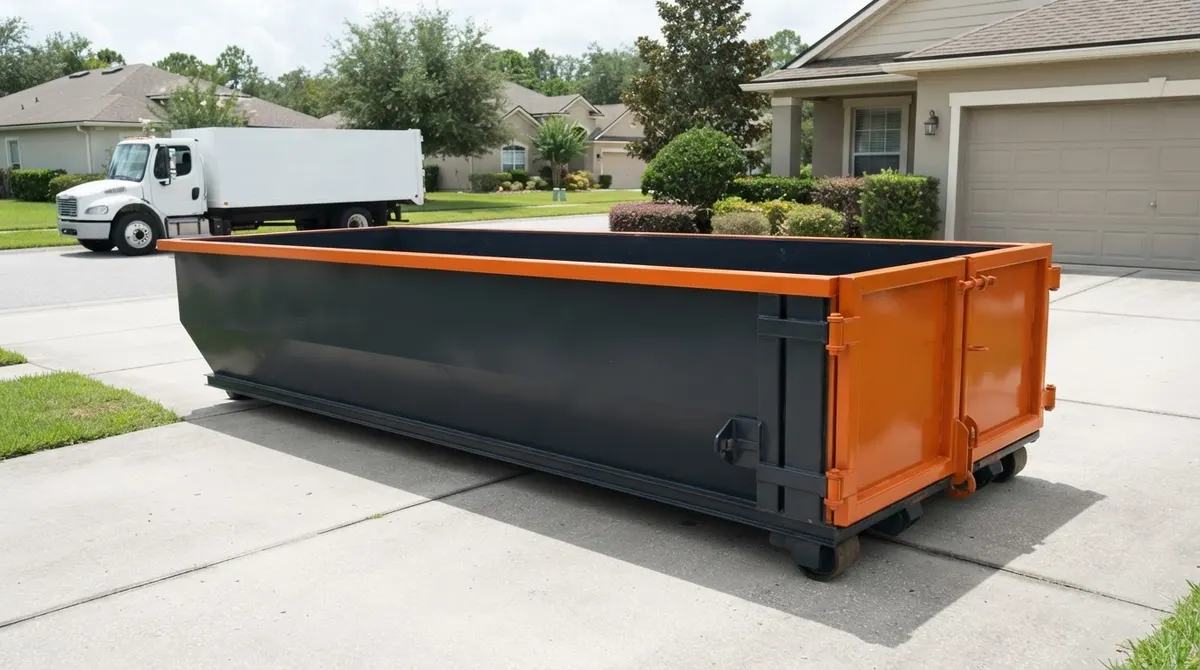
Securing a dumpster permit in Jacksonville, FL, is often necessary when a roll-off container must be placed on public property, such as a city street or sidewalk, rather than entirely on private land, a distinction crucial for residents and contractors in Duval County to avoid fines and ensure compliance with municipal ordinances.
When a Permit Is Required
A dumpster permit in Jacksonville is required when a roll-off container occupies any portion of the public right-of-way, which includes streets, sidewalks, and even some unpaved shoulders. This applies to homeowners in neighborhoods like Riverside or Arlington, as well as contractors working near TIAA Bank Field, who might need a dumpster for demolition or cleanout projects.
For example, if a dumpster for a roofing tear-off project in Mandarin cannot fit entirely within a private driveway and extends onto the street, a permit from the City of Jacksonville's Public Works Department is mandatory. Similarly, placing a dumpster on a sidewalk in San Marco, even temporarily, necessitates a right-of-way permit to ensure pedestrian access and safety, as outlined by local municipal code.
However, if a dumpster can be placed entirely on private property, such as within a driveway or on a private lot in areas like Southside or Ortega, a city permit is generally not needed. This distinction is vital because violating placement rules without a permit can result in significant fines and the forced removal of the container.
Driveway vs Street Placement Rules
The primary distinction for dumpster placement in Jacksonville is between private property (driveway) and public right-of-way (street). Placing a dumpster on a private driveway, common in many Jacksonville neighborhoods from Murray Hill to the Northside, typically requires no city permit. The property owner assumes responsibility for the container's presence and any potential driveway damage.
When a dumpster must be placed on a city street, specific rules apply to ensure public safety and traffic flow. The City of Jacksonville's right-of-way regulations stipulate that dumpsters on streets must be clearly marked with reflective tape or paint, especially during evening hours, and often require barricades or cones for visibility. Placement should not obstruct traffic lanes, fire hydrants, or bus stops, and access for emergency vehicles must be maintained at all times.
In older neighborhoods with narrow streets, such as Springfield or parts of Avondale, finding adequate street space for a dumpster can be challenging. Homeowners in these areas should assess driveway space carefully. For instances where street placement is unavoidable, the permit application process includes reviewing specific site conditions to ensure compliance with Jacksonville's Public Works guidelines for temporary obstructions.
How to Apply for a Right-of-Way Permit
Applying for a right-of-way permit for dumpster placement in Jacksonville involves several steps through the City of Jacksonville's Public Works Department:
- Contact the Public Works Department: The initial step is to reach out to the City of Jacksonville's Public Works Department or visit their permitting office, which is often located at City Hall downtown near Friendship Fountain.
- Complete the Application Form: Obtain and accurately fill out the specific application for a Temporary Obstruction Permit or Right-of-Way Use Permit. This form requires details about the project, the dumpster size (e.g., 10-yard or 30-yard), the exact placement address, and the proposed start and end dates for the dumpster's presence.
- Provide Site Plan or Sketch: A simple sketch or site plan illustrating the proposed dumpster location relative to the street, sidewalk, driveways, and any nearby intersections is typically required. This helps city officials assess potential impacts on traffic and pedestrian safety, especially on busy corridors like Atlantic Boulevard or Beach Boulevard.
- Submit Required Documentation: Applicants may need to provide proof of liability insurance from the dumpster rental company, demonstrating coverage for potential damages or accidents. The dumpster rental company can supply this documentation.
- Pay Permit Fees: Permit fees vary based on duration and location. These fees must be paid upon application submission.
- Await Approval: The Public Works Department reviews the application for compliance with city ordinances. This review period can take several business days, so applying well in advance of the planned dumpster delivery is recommended.
- Display Permit: Once approved, the permit must be prominently displayed on the dumpster or at the job site, making it visible to city inspectors.
HOA and Neighborhood Restrictions
Beyond city permits, residents in Jacksonville's planned communities and neighborhoods governed by Homeowners Associations (HOAs) must also consider additional restrictions regarding dumpster placement. HOAs in areas like St. Johns Town Center or many Southside communities often have specific rules about container size, appearance, placement duration, and even permissible colors, which are typically outlined in the community's Covenants, Conditions, and Restrictions (CC&Rs).
These HOA rules might dictate that dumpsters can only be placed in driveways, even if street placement would otherwise be allowed by the city. Some HOAs may require prior approval from the architectural review board before a dumpster can be delivered. For instance, a resident in a Mandarin HOA might need to submit a request outlining the project and dumpster details weeks in advance.
It is the renter's responsibility to verify any HOA restrictions before arranging for a dumpster rental. Failure to comply with HOA rules can lead to fines from the association, separate from any city penalties. Always consult your HOA's management company or governing documents to understand specific guidelines for temporary structures like dumpsters.
Permit Costs and Timelines
| Permit Aspect | Typical Range/Detail |
|---|---|
| Application Fee | Approximately $50 - $150 (can vary by project scope and duration) |
| Daily/Weekly Usage Fee | Some permits may include a daily or weekly fee for extended street occupancy, often $10-$25 per day. |
| Processing Time | 3-7 business days; emergency permits may be available at a higher cost. |
| Required Documentation | Application form, site plan, proof of insurance, and potentially a bond for long-term placement. |
| Permit Duration | Typically 7-30 days, renewable upon approval and additional fees. |
The cost and timeline for obtaining a dumpster permit in Jacksonville depend on several factors, including the duration of placement and the specific public right-of-way utilized. A standard temporary obstruction permit for a dumpster can range from approximately $50 to $150 for the application fee, though this can vary. Some permits may also include a daily or weekly usage fee if the dumpster occupies the public right-of-way for an extended period, such as during a multi-week renovation project near the University of North Florida.
The processing time for a right-of-way permit generally takes 3 to 7 business days. This timeframe allows the City of Jacksonville's Public Works Department to review the application, assess potential impacts, and ensure all safety requirements are met. For urgent projects, there might be options for expedited processing, though these often come with higher fees.
It is crucial to factor these timelines into project planning to avoid delays. For example, a resident undertaking a major home cleanout in a historic district that generates heavy lath and plaster debris, necessitating a 30-yard dumpster on the street, should apply for their permit well in advance of the scheduled delivery date. The minimum charge for a dumpster rental in Jacksonville is $595, and this cost is separate from any permit fees.
Permit FAQs
Q: What if I place a dumpster on the street without a permit in Jacksonville?
A: Placing a dumpster on a public street without a valid permit from the City of Jacksonville can result in fines, penalties, and the requirement to immediately remove the container. This can lead to project delays and additional costs.
Q: Does the dumpster rental company handle the permit application?
A: While some dumpster rental companies may assist with information or provide necessary documentation like insurance certificates, the responsibility for obtaining and displaying the right-of-way permit typically rests with the renter or property owner. It is best to confirm this with your chosen rental provider.
Q: Are there different permit types for various dumpster sizes?
A: Generally, the permit type for a temporary obstruction like a dumpster does not vary by size (e.g., a 10-yard versus a 40-yard). However, the specific placement requirements and potential impact on public space will be considered during the application review, especially for larger containers that occupy more street frontage.
Q: What if my project extends beyond the permit duration?
A: If a project extends past the initial permit duration, it is necessary to apply for a permit renewal or extension through the City of Jacksonville's Public Works Department. Failure to do so can result in expired permits and associated penalties.
Q: Does a permit cover damage to the street or sidewalk?
A: A permit grants permission for placement but does not cover potential damages. The renter or property owner is generally responsible for any damage to public property (streets, curbs, sidewalks) caused by the dumpster or its placement. Reputable dumpster rental services in Jacksonville take precautions to minimize such risks.
Need it handled now? See Dumpster Rental in Jacksonville.