 Home Run Dumpster Rental
Dumpster Placement on Driveways in Jacksonville
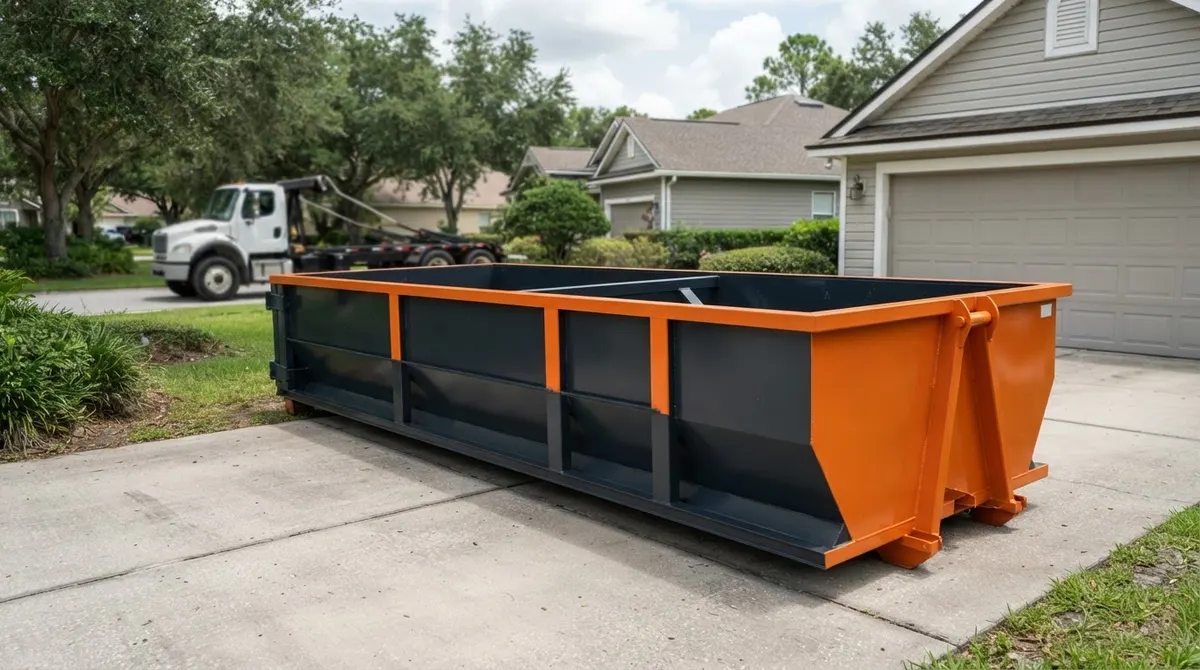
Proper dumpster placement on a driveway in Jacksonville, FL, involves selecting a stable, level surface, ensuring adequate clearance for the delivery truck, and protecting the driveway material from potential damage. Local conditions like sandy soil, narrow lots in areas like Riverside and Springfield, and heavy rain during hurricane season influence the best practices for roll-off container delivery and pickup, impacting everything from surface protection to site preparation.
Choosing the Right Placement Spot
Choosing the right placement spot for a dumpster on a driveway in Jacksonville is critical for safety and efficiency. The ideal location is a flat, solid, and easily accessible area that is free from overhead obstructions. Many properties in neighborhoods like Mandarin and Southside have ample driveway space, but older areas such as Avondale or Murray Hill often feature narrower driveways or limited street frontage, requiring careful measurement and planning. The surface must be able to support the weight of the dumpster, which can range from 10 to 40 cubic yards, plus the debris it will contain. A 20-yard dumpster filled with heavy demolition material from an older home in Springfield, for instance, can weigh several tons. Placing the dumpster on a sturdy section of concrete or asphalt minimizes the risk of sinking, especially given Duval County's generally sandy, low-lying soil and high water table. Avoid placing dumpsters over septic tanks, utility lines, or sprinkler systems. The Environmental Protection Agency (EPA) provides guidelines on handling various waste types, which can also influence placement if specific materials are expected.
Protecting Pavers and Asphalt
Protecting driveway surfaces like pavers and asphalt during dumpster placement is a key concern for Jacksonville homeowners. The weight of a fully loaded roll-off dumpster can cause cracks, indentations, or shifting of materials if not properly mitigated. Dumpster rental services often recommend using plywood boards as a buffer. These boards distribute the dumpster's weight more evenly across the surface, reducing pressure points from the steel wheels and feet.
- Assess the Surface: Before delivery, inspect the driveway's condition. Note any existing cracks or weak spots in asphalt or loose pavers that might be more susceptible to damage.
- Gather Materials: Acquire at least two sheets of 4x8-foot, 3/4-inch thick plywood. These are generally sufficient for a standard 10 or 20-yard dumpster.
- Position Plywood: Place the plywood sheets where the dumpster's rails and wheels will rest. The delivery driver will guide the placement, but having the boards ready ensures a smooth process.
- Monitor During Use: During the rental period, especially after heavy rains common in Jacksonville's summer, check the plywood and driveway for any signs of sinking or shifting. Adjust as needed.
- Post-Removal Inspection: After the dumpster is picked up, conduct a final inspection of the driveway surface to ensure no unforeseen damage occurred.
For asphalt driveways, particularly those recently paved or in direct sun, the surface can soften, making it more vulnerable to impressions from heavy objects. Using multiple layers of plywood or thicker boards can offer additional protection. The Federal Highway Administration (FHWA) offers extensive research on pavement durability and weight distribution.
Clearance the Delivery Truck Needs
The delivery truck requires specific clearance measurements to safely drop off and pick up a roll-off dumpster on a Jacksonville driveway. These dimensions are critical, especially in older neighborhoods like Springfield or Ortega, which often have mature trees, narrow streets, and compact lots. Ignoring these requirements can lead to delayed deliveries or the inability to place the dumpster at all.
| Clearance Type | Minimum Requirement | Local Considerations |
|---|---|---|
| Overhead Clearance | 20-25 feet vertical | Avoid tree branches, power lines, low eaves, basketball hoops. Tall oak trees are common near the Cummer Museum of Art and Gardens. |
| Width Clearance | 10-12 feet horizontal | Account for mailboxes, fences, parked cars, gate openings. Some driveways near St. Johns Town Center are wider, but many residential ones are not. |
| Turning Radius | 50-75 feet straight-line access | The truck needs space to back up and maneuver. Consider tight turns on cul-de-sacs or driveways off busy roads like Atlantic Boulevard. |
| Unloading Space | Approximately 15-20 feet beyond the dumpster's length | This allows the truck to tilt the dumpster off the bed. Ensure no cars or obstructions are in this path. |
Drivers need to navigate safely without striking property or utility lines. The Occupational Safety and Health Administration (OSHA) outlines safety standards for equipment operation and clear zones, which are relevant for professional haulers. Homeowners should walk the path from the street to the intended placement spot, identifying any potential obstacles. This is particularly important for homes near the Jacksonville Zoo and Gardens, where older, larger trees are common.
Avoiding Damage and Liability
Avoiding damage and understanding liability are crucial aspects of dumpster placement for any project in Jacksonville. The homeowner or contractor typically assumes responsibility for the chosen placement site and any resulting damage. This includes damage to the driveway itself, landscaping, underground utilities, or overhead structures. For instance, if a dumpster is placed on a soft grass area due to Duval County's sandy soil and sinks, causing ruts, the property owner is generally responsible for repairs. Similarly, if the delivery truck's turning radius is misjudged and it strikes a fence or mailbox, determining liability depends on whether adequate clearance was provided.
To minimize risks, always communicate specific concerns with the dumpster rental company, especially regarding unique property features common in areas like Arlington or the Northside. Confirming that the site is level and free of obstructions is a key preventative measure. The weight of debris also plays a role; heavy summer rain can make materials like drywall or roofing shingles significantly heavier, potentially pushing the dumpster's weight beyond safe limits for the surface. Adhering to weight limits prevents overfilling and subsequent damage during pickup. The city of Jacksonville itself provides resources and codes related to property maintenance and waste management, which residents should consult.
Prepping the Site Before Delivery
Proper site preparation before a dumpster delivery ensures a smooth process and helps prevent potential issues. This preparation is especially important in Jacksonville, given local weather patterns and diverse property types.
- Clear the Area: Remove any vehicles, potted plants, yard décor, or loose items from the intended placement spot and the access path. This includes clearing space around gates or narrow driveways found in historic districts like Riverside.
- Trim Obstructions: Check for low-hanging tree branches, overgrown bushes, or other vegetation that might interfere with the truck's overhead or side clearance.
- Lay Down Protection: Place plywood boards or other protective barriers on the driveway surface if it's asphalt, pavers, or a surface you wish to protect. Have these ready before the driver arrives.
- Mark Underground Utilities: If the dumpster might be placed near known utility lines, sprinkler heads, or a septic tank, clearly mark these areas with flags or spray paint. Florida's Call 811 service can help locate underground lines.
- Ensure Level Ground: Confirm the chosen spot is as level as possible. Uneven surfaces can cause the dumpster to shift or settle improperly.
- Address Soft Ground: If placing on grass or gravel, especially during or after heavy rains common during hurricane season, consider additional ground protection to prevent sinking. The high water table in much of Duval County makes this particularly relevant.
Placement Questions
Common questions arise regarding dumpster placement, particularly for residents navigating projects in Jacksonville. Understanding these details helps ensure a compliant and efficient rental experience.
Q: Do I need a permit for dumpster placement in Jacksonville?
A: A permit is generally not required if the dumpster is placed entirely on private property, such as a driveway. However, if any part of the dumpster will extend onto public property, like a street or sidewalk, a permit from the City of Jacksonville's Public Works Department is usually necessary. This is especially relevant in denser areas or on busy roads like Beach Boulevard or US-1 (Philips Highway).
Q: Can a dumpster be placed on grass or gravel?
A: While possible, placing a dumpster on grass or gravel is generally not recommended without significant ground preparation. Jacksonville's sandy soil and high water table mean that a heavy dumpster can easily sink, creating ruts and potential damage. If placement on grass is unavoidable, use multiple layers of heavy-duty plywood to distribute the weight and protect the underlying ground. Always discuss this with the rental company beforehand.
Q: What if my driveway is too small or has a steep incline?
A: Narrow lots and steep inclines, sometimes found in areas like San Marco or near the University of North Florida, can pose challenges. It's best to communicate these conditions to the dumpster rental company when booking. They can assess if the truck has sufficient turning radius and if a safe placement is feasible. Sometimes, street placement with a permit might be the only option. The minimum charge for a dumpster rental in Jacksonville is typically around $595.
Q: What should I do if the dumpster causes damage?
A: If damage occurs, document it immediately with photos and contact the dumpster rental company. The terms of your rental agreement will outline liability. Prevention through proper site preparation and communication is always the best approach. Consulting with a local Florida legal professional may be advisable for significant damages.
Need it handled now? See Dumpster Rental in Jacksonville.